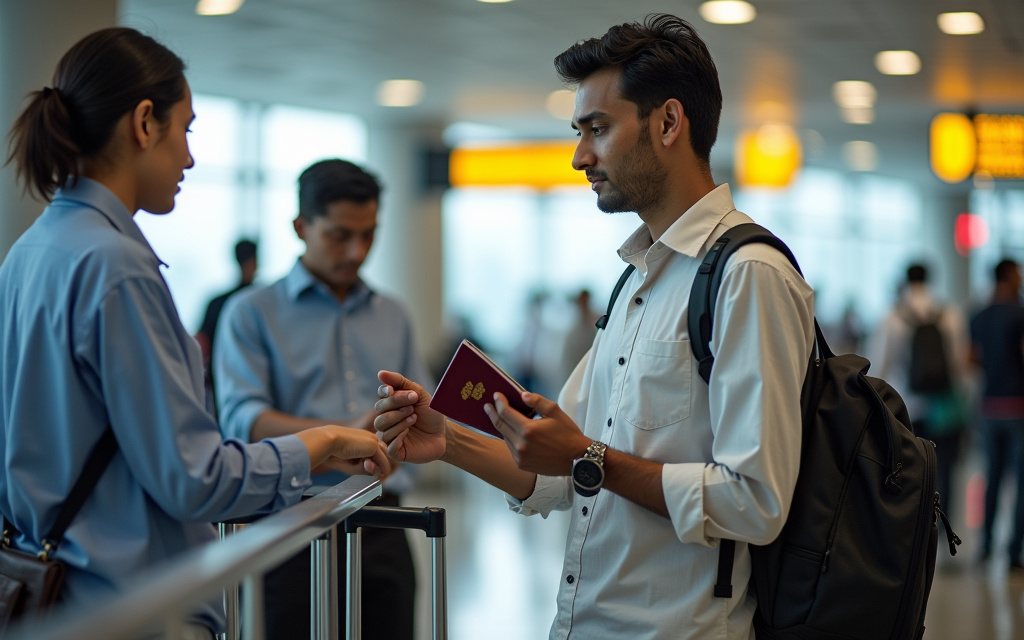

Going abroad for work is one of the biggest decisions a person and their family can make. Months of planning, savings and hope go into it, and paperwork is a large part of the journey. Alongside the passport, visa and employment contract, most workers will need some kind of health documentation: a medical fitness report, vaccination records, or both. When these papers are missing, inconsistent or fake, the consequences can be serious, from delays at the airport to losing a job offer.
This guide is written for Bangladeshi workers and the families who support them. It explains, in general terms, which health documents are often requested, how to keep them organised and consistent, and how to protect yourself from scams. Surokkha Guide is an independent information site. We are not a recruiting agency, a medical centre or a government office. Requirements differ by destination country, employer and type of job, and they change over time, so always confirm the details with your licensed recruiting agency, the destination country's embassy, official Bangladeshi government channels and, for vaccine certificates, the official portal.
Key takeaways
- Health documents often requested for overseas work include a medical fitness report, vaccination records and sometimes a COVID-19 vaccine certificate.
- The name, date of birth and passport number should match your passport on every document.
- Keep a document folder with paper copies, phone copies and a set left with your family at home.
- Confirm that your agent and medical centre are legitimate through official channels, such as BMET, before you pay anything.
- Never buy a "guaranteed" fitness report or certificate, and never share OTP codes or ID numbers with strangers.
Why health documents matter for overseas work
Countries that receive foreign workers usually want to know that new arrivals are fit for the job and do not carry certain infectious diseases. Employers want the same assurance, and some jobs, such as work in healthcare, food handling or construction, can involve additional health checks. As a result, a health document is often part of the visa or work permit process, not an optional extra.
Health documents also protect you: a clear vaccination record helps doctors abroad understand your history if you fall ill.
Documents workers are often asked for
Every destination and employer has its own list. The items below are the ones we most often see mentioned. Treat this as a starting point for your questions, not a final checklist.
Passport
Your passport is the reference document for everything else. Its details, especially the spelling of your name and your date of birth, should appear the same way on every other paper. Make sure it will remain valid for the period your destination requires.
Pre-departure medical fitness report
Many destination countries require a medical examination before a work visa is issued. This is often done at a medical centre that has been approved for that particular destination, and the examination may include a physical check, blood tests and a chest X-ray. The exact tests, the list of approved centres and how results are shared are decided by the destination country's system, so ask your licensed recruiting agency and the embassy which centres are approved. Some countries also repeat medical tests after arrival.
Vaccination records
Some employers and destinations ask for proof of specific vaccinations. This may include a COVID-19 vaccination certificate, and sometimes other vaccines depending on the job or destination. If you were vaccinated against COVID-19 in Bangladesh, your certificate comes through the official portal. Our guide on downloading your Surokkha vaccine certificate explains the general steps. If you are not sure which vaccines are relevant to your job or destination, speak to a qualified health professional or travel clinic.
Employment and visa papers
Your contract, visa, work permit and overseas employment clearance are usually checked alongside health documents, so keep them in the same folder.
Only the official portal can issue a Bangladeshi COVID-19 vaccination certificate. No agent, broker or website, including Surokkha Guide, can issue one for you.
Make sure every document matches your passport
A frequent problem for workers is small differences between documents. Your vaccination may have been registered using your National ID card or birth registration number, while your visa and medical report use your passport. If your name is spelled differently, or if your passport number is missing or outdated, an officer may question whether the documents belong to the same person.
Before you submit anything, sit down with all your papers and check:
- The spelling of your full name, including the order of names, against your passport.
- Your date of birth on every document.
- Your passport number, especially if you have renewed your passport recently.
- That the QR code on your vaccine certificate scans and opens a verification result.
- That your medical report shows the correct personal details and date.
If you find a mistake on your vaccine certificate, start fixing it early through official channels. Our guide on correcting errors on your vaccine certificate explains the general options.
Build a document folder you can trust
Many workers keep their papers in a simple clear plastic folder. It sounds basic, but good organisation prevents a lot of stress at the airport and after arrival. We suggest keeping three sets.
| Copy | What to include | Tips |
|---|---|---|
| Paper set in your hand luggage | Passport, visa, contract, medical report, vaccination certificate and records | Print the certificate clearly so the QR code scans; keep originals flat and dry |
| Phone copies | Photos or PDFs of every document | Save them so they open without internet; lock your phone with a PIN |
| Family copy at home | Photocopies of all documents | Leave with a trusted family member who can send them if yours are lost |
Also note down, on paper, important phone numbers: your employer, your recruiting agency and the nearest Bangladesh embassy or mission abroad.
How to check that an agent or medical centre is legitimate
Most recruiting agencies and medical centres are honest, but workers are sometimes targeted by people who are not. Before you pay any money or hand over your passport, take these steps:
- Check the agency's licence through official government channels. The Bureau of Manpower, Employment and Training (BMET) is the government body that deals with overseas employment, and official channels can tell you whether an agency is licensed.
- Ask which medical centres are approved for your destination, and confirm the answer with the embassy or official sources, not only with the agent.
- Ask for receipts for every payment, with the name of the organisation.
- Be cautious of pressure. A genuine process does not require you to decide within hours or to hand over documents to someone you have never met.
- Talk to returning workers and family members who have been through the process.
Scams to avoid
Health documents are a common target for fraud, because workers are under time pressure and want to avoid delays. Watch out for these warning signs:
- "Guaranteed fit" medical reports. Nobody can honestly guarantee a result before an examination. Buying a report without a real examination is fraud and can lead to deportation after arrival, where tests may be repeated.
- Fake or edited vaccine certificates. Genuine certificates carry a QR code that can be checked. Anyone who scans a fake one may see that it does not match. See how certificate verification works.
- Requests for your OTP. An OTP is a one-time code sent to your phone. Sharing it can let someone access or misuse your registration. No genuine helper needs it.
- Paid "fixers" who promise quick corrections. Corrections go through official channels. Paying a stranger can cost you money and your personal information.
If something feels wrong, stop and ask an official source for advice.
Looking after your health records while abroad
Your health record does not end when you leave Bangladesh. If you receive a vaccine, a medical test or treatment abroad, ask for a written record in English or another widely used language, showing the date, the vaccine or test name and the clinic's details. Where possible, ask for an international-format record. Keep these with your other documents and send a photo to your family at home.
If you have a long-term condition, carry a letter or list of your medicines from your doctor. If you feel unwell abroad, seek care from a qualified health professional; this guide cannot give personal medical advice. Our overview of travelling abroad with a Bangladeshi vaccine certificate has more on travel health preparation.
Coming home
When you return to Bangladesh, bring all your health records with you, including anything you received abroad. Rules for arriving in Bangladesh can change, so check the current requirements with your airline and official Bangladeshi sources before your flight. If you want a vaccine received abroad to appear in Bangladeshi records, ask the official portal or your local health office whether this is possible; options may be limited. Keep your folder in a safe place, because you may need it again for a future job.
Frequently asked questions
Which medical centre should I use for my pre-departure medical test?
Many destination countries only accept results from medical centres approved for that destination. Ask your licensed recruiting agency which centres are approved, and confirm with the destination country's embassy or official sources. Do not rely only on a stranger's recommendation.
Do I need a COVID-19 vaccine certificate to work abroad?
It depends on the destination, the employer and the type of job, and requirements have changed over time. Some employers may still ask for it. Check with your employer, your licensed agency and the embassy, and download your certificate only from the official portal.
My vaccine certificate uses my NID name, which is spelled differently from my passport. What should I do?
Compare the details carefully and start the correction process early through official channels, such as the official portal or your local health office. Keep proof of your identity documents with you. Avoid anyone who offers to change your certificate for a fee.
Someone offered me a fitness report without a medical test. Is that allowed?
No. A genuine fitness report requires a real examination. Buying one is fraud and can lead to serious consequences, including refusal of entry or deportation, especially as many countries repeat tests after arrival.
How can my family help if I lose my documents abroad?
Leave a full set of photocopies with a trusted family member before you travel, and keep digital copies on your phone. If documents are lost, contact your employer and the nearest Bangladesh embassy or mission for guidance.